In the hives that have new queens, the beekeeper needed to check to Verrora mites, but the usual way involes killing the bees, so this is an alternate. A tray is removed from the hive and he shakes down the bees into a wash basin.
He then measures out a half cup of bees.
These bees are put into a jar with an open lid, through which is added powdered sugar.
Shake well, and then shaked some more. And then finally shake the sugar into the wash basin.
If there are more than five Verrora mites in the sugan, the hive needs treatment. To be continued....
Tuesday, September 11, 2012
Monday, September 10, 2012
Beautiful Day
Picture postcard days!
A picture to remember.
And in the meadow an adult locust borer eats golenrod pollen.
I haven't seen as many mantids, but I did find this egg case.
The monarchs were everywhere -- in my garden, in the post office garden and in the meadow.
A picture to remember.
And in the meadow an adult locust borer eats golenrod pollen.
I haven't seen as many mantids, but I did find this egg case.
The monarchs were everywhere -- in my garden, in the post office garden and in the meadow.
Friday, September 7, 2012
Life cycle of the Cloudless Sulphur
Here is a male courting a female cloudless sulphur in the meadow.
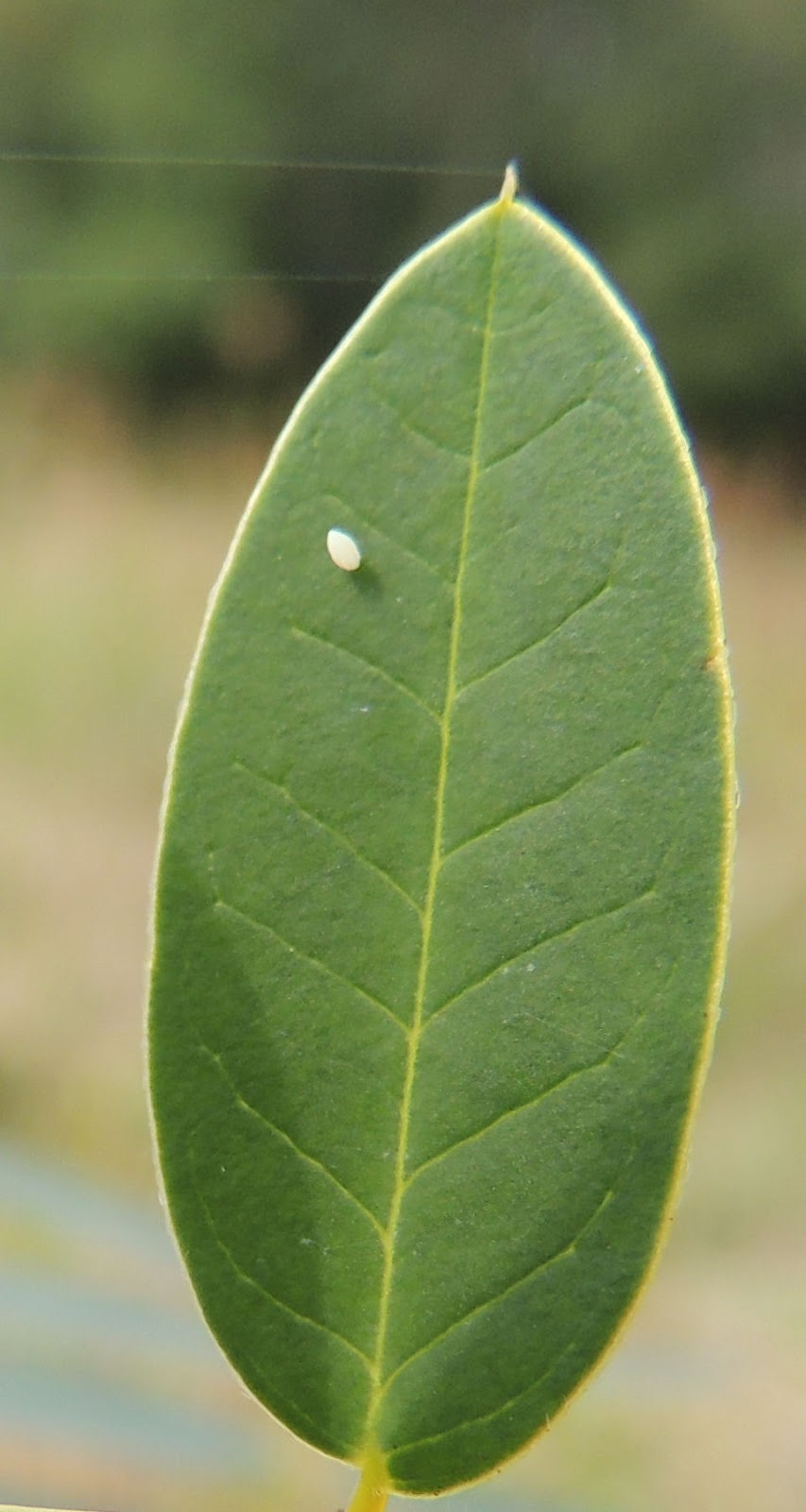
The female has been laying egs on the wild senna (cassia hebecarpa).
Here you can see one of the eggs on a senna leaf.
And here is the caterpillar on the senna pod.
From "Butterflies of the East Coast" by Cech and Tudor, "It ranges in summer from Pataglonia to southern Canada. ... Why large numbers fly far north in fall, never to return, is a mystery."
The female has been laying egs on the wild senna (cassia hebecarpa).
Here you can see one of the eggs on a senna leaf.
And here is the caterpillar on the senna pod.
From "Butterflies of the East Coast" by Cech and Tudor, "It ranges in summer from Pataglonia to southern Canada. ... Why large numbers fly far north in fall, never to return, is a mystery."
Thursday, September 6, 2012
My Reference Library
I have always had many books on the bookself in my living room which are invaluable references.
I also have a whole bookcase devoted to butterflies, insects, and such.
But I decided I needed some reference books handy to the computer, so I got this nice basket to hold them.
All too quickly the lineup extended beyond the basket. Including such as "Damselflies of the Northeast", which is way beyond me, and the latest is Peterson's "Field Guide to Moths".
And I have an assistant always ready to help me with a search.
I also have a whole bookcase devoted to butterflies, insects, and such.
But I decided I needed some reference books handy to the computer, so I got this nice basket to hold them.
All too quickly the lineup extended beyond the basket. Including such as "Damselflies of the Northeast", which is way beyond me, and the latest is Peterson's "Field Guide to Moths".
And I have an assistant always ready to help me with a search.
Wednesday, September 5, 2012
All around
The mantids are no longer clinging to the senna, as it has ceased blooming.
The are looking for prey on goldenrod and other plants that are blooming now.
Went looking for mushrooms in the Japanese garden, but this was all I found.
Not a new species, but a moulting house finch.
The are looking for prey on goldenrod and other plants that are blooming now.
Went looking for mushrooms in the Japanese garden, but this was all I found.
Not a new species, but a moulting house finch.
Monday, September 3, 2012
Puddling
A Foulkeways resident was given a gift of a "puddler", which is supposed to attract butterflies. But she has not seen a butterfly come to it yet.
This image of a puddling spot came from the internet.
I have seen tiger swallowtails puddling, but not here at Foulkeways. Male butterflies need minerals found in puddles, stream bamks and other damp surfaces. If urine is present in the water, it will make the puddle especially attractive. Males pass the minerals along with the sperm to the female when they mate. It is felt that the females need these minerals in the production of eggs.
But on a rainy day like today, the butterflies are hiding from the rain, and not even the birds are interested in a bird bath.
This image of a puddling spot came from the internet.
I have seen tiger swallowtails puddling, but not here at Foulkeways. Male butterflies need minerals found in puddles, stream bamks and other damp surfaces. If urine is present in the water, it will make the puddle especially attractive. Males pass the minerals along with the sperm to the female when they mate. It is felt that the females need these minerals in the production of eggs.
But on a rainy day like today, the butterflies are hiding from the rain, and not even the birds are interested in a bird bath.
Saturday, September 1, 2012
First of September
This is a cloudless sulphur, very large and lemony yellow.
The cloudless suphur is a resident of the south and a variable migrant in September. Probably attracted by our Sennas, which is its host plant.
Most of the time it is flying, and often high in the trees.
Here it is the first of September and the Bidens is starting to bloom. Watch for it in different places, as it is a self-seeding annual.
Also blooming in the morning is chickory, which is near the wetland. Years ago some residents tried very hard to establish it in the meadow with no success. Now it has come into our area on its own.
The cloudless suphur is a resident of the south and a variable migrant in September. Probably attracted by our Sennas, which is its host plant.
Most of the time it is flying, and often high in the trees.
Here it is the first of September and the Bidens is starting to bloom. Watch for it in different places, as it is a self-seeding annual.
Also blooming in the morning is chickory, which is near the wetland. Years ago some residents tried very hard to establish it in the meadow with no success. Now it has come into our area on its own.
Subscribe to:
Posts (Atom)